Ragweed pollen climbs through late August and peaks around September 19 in Atlanta. Here is what genuinely lowers it inside a house, what does not, and where cleaning actually fits.
Ragweed starts releasing pollen in Georgia as early as August, and late August is when weed pollen season properly begins. Counts climb through September and typically peak around September 19 in Atlanta. On the worst days they exceed 500 grains per cubic metre — high enough to bother people who do not normally consider themselves allergic to anything.
You cannot do much about the pollen count outside. You can do a great deal about how much of it ends up in your bedroom.
This is a practical guide to what actually works indoors, in rough order of how much difference it makes. Some of it we handle as part of a clean. Some of it is yours, and we would rather say so than pretend a cleaning service solves everything.
What makes the biggest difference
Stop it at the door
Pollen arrives on shoes, clothes, bags and dogs. Every one of those is a decision rather than an accident.
- Shoes off at the door through September. This single habit does more than any product you can buy.
- A coarse-bristle mat outside and a washable mat inside. Two mats, not one.
- Change out of outdoor clothes before sitting on upholstered furniture.
- Wipe the dog down after walks — a damp microfibre cloth is enough.
Deal with the bedroom first
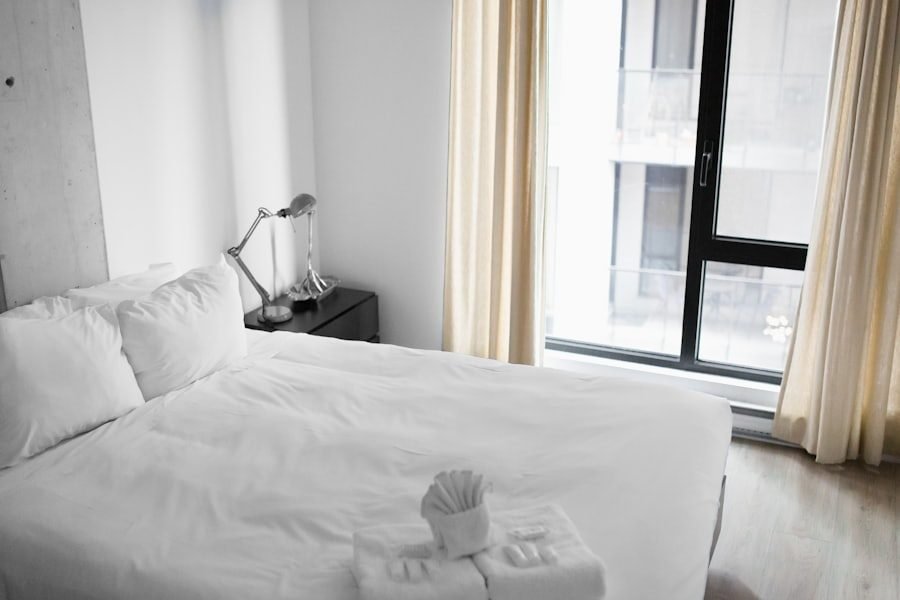
You spend roughly a third of the day with your face pressed into bedding. If you change only one thing this month, change this one.
- Wash sheets and pillowcases weekly in hot water through September.
- Shower before bed rather than in the morning during peak weeks. Otherwise you carry the whole day's pollen to the pillow.
- Keep the bedroom window closed, including on the pleasant evenings that make you want to open it. Those are often the highest-count evenings of all.
Change the HVAC filter, and buy the right one
A cheap fibreglass filter protects your equipment, not your lungs. For pollen you want something in the MERV 11 to 13 range, which catches particles small enough to matter while still letting the system breathe.
Change it monthly through ragweed season rather than quarterly. And check what your system can take — a very high MERV filter on an undersized blower restricts airflow, which helps nobody. If you are unsure, ask your HVAC company rather than your cleaner.
Vacuum with something that contains what it picks up
A vacuum without proper filtration collects dust at floor level and pushes the fine fraction back into the air you are standing in. That is worse than not vacuuming at all. Look for genuine HEPA filtration and a sealed body, and empty the canister outside.
Hard floors beat carpet, and edges matter
Pollen settles into carpet pile and stays there. On hard floors it sits on the surface where it can actually be removed — but it also gathers along baseboards and in corners, which is precisely where a rushed clean skips.
What helps less than people think
- Air fresheners and scented sprays. They change how a room smells. They do nothing to the pollen in it, and for some people the fragrance adds a second irritant.
- Houseplants sold as air purifiers. The research behind that claim used sealed laboratory chambers. In a real house with real air exchange, the effect is negligible.
- Pressure-washing the porch in mid-September. Satisfying, and it lasts about a day. Wait until after first frost.
- A small air purifier in a large open-plan room. Match the unit to the square footage, or put it where you sleep. A bedroom-sized purifier in a bedroom is worth more than the same unit in a great room.
Where a cleaning service actually fits
Plainly: cleaning is not a treatment for allergies, and any company that suggests otherwise is selling something. What a thorough clean does is lower the reservoir of settled particles in the house, so there is less to be stirred back into the air every time someone walks through.
The parts of a clean that matter most here are the ones most often skipped when a visit is rushed:
- Baseboards, door frames and the tops of trim
- Window sills and — more importantly — the tracks
- Ceiling fan blades, which redistribute everything sitting on them the moment you switch the fan on
- Supply vents and return covers
- Under and behind furniture rather than around it
That list is essentially the difference between a standard visit and a deep clean. If you have not had a deep clean this year, September is a sensible month for one.
What this costs in North Atlanta
For reference, on our published pricing a one-off deep clean runs $307 to $391 for a 3 bedroom, 2 bathroom home and $386 to $491 for a 4 bedroom, 3 bathroom. Recurring bi-weekly service afterwards is $171 to $218 and $215 to $273 respectively.
You can run your own numbers on our pricing page before calling anyone.
Why North Atlanta has it slightly worse
Suwanee, Johns Creek, Milton and Alpharetta sit on heavily wooded lots. That is lovely for eleven months of the year and works against you in September: more tree cover and more open ground around a house means more surface for weed pollen to settle on, and more of it tracked inside.
Homes with covered porches, screened porches and mudrooms have a real advantage — but only if those spaces are actually cleaned. A screened porch after three weeks of ragweed is closer to a deep clean than a wipe-down, and it is the room most likely to get skipped.
Common questions
When does ragweed season end in Georgia?
It runs until the first hard frost, which in metro Atlanta usually falls in early to mid November. September is the worst month. October is better but not over.
Does closing windows really matter if I have central air?
Yes. An open window bypasses your filter completely. During peak weeks the air coming through it carries the full outdoor count straight into the room.
Should I book a deep clean or just a regular visit?
If it has been more than a year since a thorough clean, book the deep clean — the settled reservoir in trim, vents and fan blades is exactly what you are trying to remove. If you already have recurring service, ask whether your usual visit covers vents and fan blades, and add them if it does not.
Will cleaning fix my allergies?
No. It reduces one input among several. Medication, HVAC filtration and keeping pollen out of the house all matter more than any individual clean. We would rather set that expectation now than have you disappointed in October.
Which areas do you cover?
Suwanee, Cumming, Johns Creek, Milton, Alpharetta, Duluth, Buford and Norcross. See service areas for detail on each.